
From Spreadsheets to Software: Modernizing Your Valuation Practice
Why leading CPA firms are replacing spreadsheets with purpose-built valuation platforms to deliver faster, audit-defensible 409A and ASC 820 reports.

Key Takeaways
- check_circleManual spreadsheet-based valuations introduce formula errors, version control issues, and audit risk that purpose-built software eliminates.
- check_circleModern valuation platforms like Zimbs Valetex support multiple methodologies (DCF, GPC, GTM, Backsolve, and OPM) with weighted blending in a single workflow.
- check_circleIntegrated cap table management keeps valuation inputs synchronized with the latest equity structure, cutting reconciliation time by hours.
- check_circleCloud-based platforms provide built-in audit trails, report generation, and multi-user collaboration that spreadsheets simply can't replicate.
- check_circleFirms that adopt valuation software consistently report faster turnaround times and stronger audit defensibility across their 409A and ASC 820 engagements.
The Hidden Cost of Spreadsheet Valuations
For years, CPA firms and valuation analysts have relied on sprawling Excel workbooks to perform 409A valuations, ASC 820 fair value measurements, and equity allocation analyses. These spreadsheets always start simple: a few tabs for financial data, a DCF model, a comparable companies sheet. But before long, they grow into brittle, multi-tab monsters that only the original author can navigate.
Here's the thing: the problem isn't that spreadsheets are incapable. It's that they were never designed for the structured, repeatable, and auditable workflows that professional valuations demand. And as regulatory scrutiny around 409A compliance and ASC 820 reporting continues to intensify, the gap between what spreadsheets offer and what firms actually need keeps widening.
Five Signs Your Valuation Workflow Needs an Upgrade
Not every firm needs to overhaul its process overnight. But if any of the following pain points sound familiar, it might be time to evaluate a purpose-built solution.
1. You spend more time formatting than analyzing
If your team spends hours copying data between cap table spreadsheets, financial models, and report templates, that's time taken away from the analytical judgment that clients actually pay for. A modern valuation platform automates the data flow between cap table, financials, and methodology modules so your analysts can focus on the work that actually matters.
2. Version control is a nightmare
"Valuation_v3_FINAL_JohnEdits_FINAL2.xlsx" ... if this naming convention looks familiar, your firm has a version control problem. When multiple analysts touch the same workbook, tracking who changed what assumption (and when) becomes nearly impossible. Cloud-based platforms solve this by maintaining a single source of truth with complete change history.
3. Audit responses consume entire days
When a Big 4 auditor asks to see the basis for your comparable company selection or the inputs behind your OPM breakpoints, you shouldn't need to dig through emails and file shares. A well-designed platform keeps every assumption, data source, and calculation step documented and exportable. What used to be a two-day audit prep becomes a two-minute report download.
4. Methodology switching is a major effort
Client circumstances change. A company that was best suited for a DCF approach last quarter may now have better comparable data for GPC analysis. In spreadsheets, switching or blending methodologies often means rebuilding significant portions of the model. With Zimbs Valetex, it's just a matter of enabling additional approaches and adjusting the weighting.
5. Your cap table lives separately from your valuation
The equity structure is the foundation of every valuation. When your cap table is maintained in one spreadsheet and your valuation model in another, reconciliation errors are inevitable. Every new option grant, warrant exercise, or funding round means updating two separate files and hoping nothing falls out of sync.
What a Modern Valuation Platform Looks Like
Purpose-built valuation software isn't just a spreadsheet with a better interface. It's a fundamentally different approach to managing the full valuation lifecycle, from cap table setup through methodology execution, allocation, and reporting.
Here's what firms should expect from a modern platform like Zimbs Valetex:
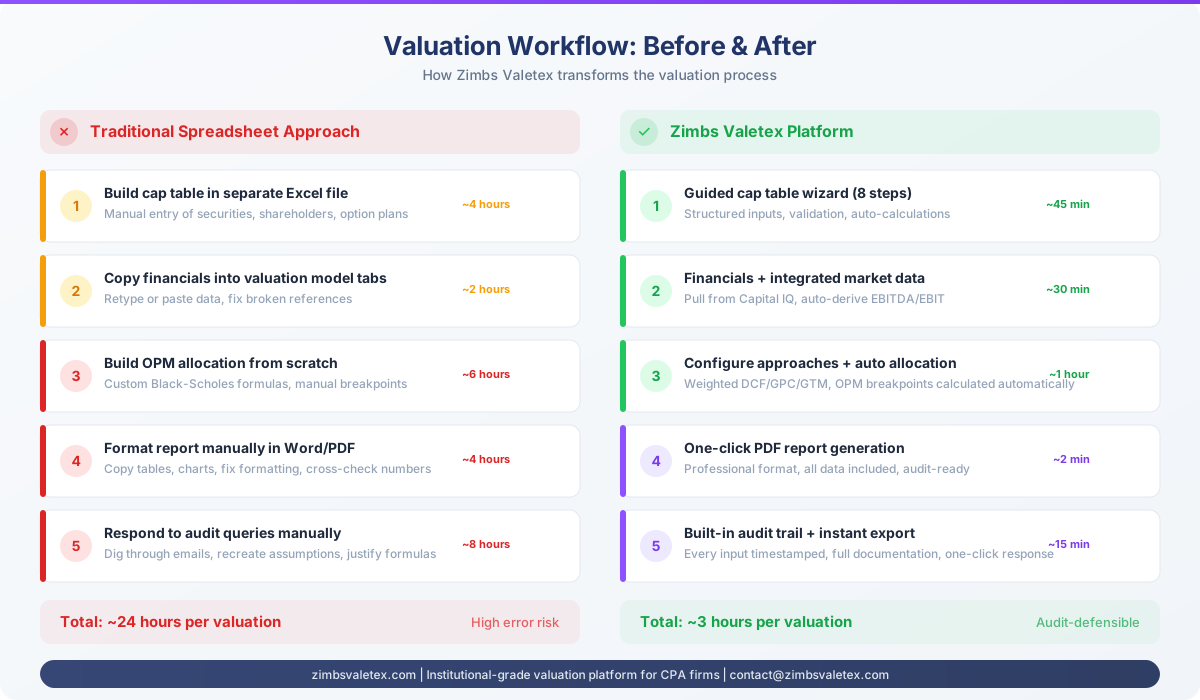
| Capability | Spreadsheet Approach | Zimbs Valetex |
|---|---|---|
| Cap table management | Separate file, manual sync | Integrated module with securities, options, warrants, and participation tracking |
| Valuation methodologies | One model per tab, manual blending | DCF, GPC, GTM, Backsolve, and Post-Money with configurable weighted blending |
| Equity allocation | Custom OPM formulas, error-prone | OPM, CVM, and CSE allocation with automated breakpoint calculations |
| DLOM application | Manual Finnerty/Chaffe calculations | Built-in Chaffe, Finnerty, Geometric Average, and Restricted Stock models |
| Market data | Manual lookup and entry | Integrated Capital IQ, Yahoo Finance, and FMP data feeds |
| Report generation | Manual formatting in Word/PDF | One-click PDF and Excel report generation with professional formatting |
| Audit trail | Email chains and file timestamps | Complete change history with timestamped inputs and calculation logs |
| Multi-user collaboration | File sharing and merge conflicts | Role-based access with concurrent editing and permission controls |
Deep Dive: The Zimbs Valetex Workflow
To really see the practical difference, let's walk through a typical 409A valuation workflow on the Zimbs Valetex platform.
Step 1: Build the cap table
You start by defining the company's equity structure using the guided cap table wizard. The eight-step process covers securities, share class details, investment shares, option plans, warrant plans, participation rights, dividends, and a final review. Each security class captures liquidation preferences, conversion ratios, and seniority, and all of that data flows directly into the allocation models downstream.
Step 2: Enter financial data
Next, input income statement and balance sheet data across seven standardized periods, from two years prior through two years of projections. The platform automatically derives key metrics like EBITDA, EBIT, and gross profit. For GPC and GTM approaches, comparable company financials can be pulled directly from integrated market data sources.
Step 3: Select and configure valuation approaches
Enable one or more enterprise value approaches (DCF, GPC, GTM, Backsolve, or Post-Money) and assign a weight to each. The GPC module includes a full comparable company screening workflow with revenue and EBITDA multiple analysis and statistical percentile calculations. The Backsolve method reverse-engineers equity value from a known transaction price.
Step 4: Allocate equity value
Distribute the total equity value across security classes using one or more allocation methods. The Option Pricing Model (OPM) uses Black-Scholes to create breakpoints for each security class. The Current Value Method (CVM) and Common Stock Equivalent (CSE) offer alternative allocation perspectives. All three methods can be weighted and combined to arrive at a final per-share value.
Step 5: Apply DLOM
Apply a Discount for Lack of Marketability at the company level or per share class. The platform supports four DLOM models: Chaffe Protective Put, Finnerty Average-Strike Put, Geometric Average Rate, and Restricted Stock Studies. Each one is configurable with equity or class-level volatility inputs derived from comparable company data.
Step 6: Generate reports
Finally, export a comprehensive PDF report covering every step of the analysis: methodology selection rationale, comparable company details, allocation breakpoints, DLOM calculations, and final per-share values. The report comes out formatted and ready for direct delivery to clients or auditors. No manual formatting required.
Who Benefits Most from Valuation Software?
While any firm performing equity valuations can benefit from a structured platform, certain profiles tend to see the biggest impact:
- CPA firms with growing 409A practices that need to scale without proportionally growing headcount
- Private equity and venture capital firms managing portfolio company valuations across multiple funds
- Financial advisory firms handling ASC 820 fair value measurements up against audit-season deadlines
- Firms with junior analysts who need structured workflows and built-in guardrails to maintain quality
- Any practice where audit defensibility is a competitive differentiator
The ROI of Switching
The return on adopting valuation software is measurable across three dimensions:
| Dimension | Impact |
|---|---|
| Time savings | Reduce per-valuation turnaround from days to hours by eliminating manual data transfer, formatting, and report assembly |
| Error reduction | Structured inputs and automated calculations remove the formula-error risk inherent in complex spreadsheet models |
| Audit efficiency | Built-in documentation and one-click report generation cut audit-response time from days to minutes |
The firms that invest in their valuation infrastructure today will be the ones winning mandates tomorrow. Not because they're cheaper, but because they're faster, more accurate, and easier to audit.
Getting Started with Zimbs Valetex
Zimbs Valetex is built for valuation professionals who demand institutional-grade rigor without the overhead of managing sprawling spreadsheet models. The platform offers flexible subscription tiers, from Starter plans for smaller practices to Enterprise deployments with dedicated support and custom integrations.
Whether you're performing your first 409A valuation or managing hundreds of portfolio company valuations across multiple funds, Zimbs Valetex gives your practice the structure, automation, and audit-readiness it needs to scale.
Conclusion
The shift from spreadsheet-based valuations to purpose-built software isn't a matter of if. It's a matter of when. As regulatory requirements grow more demanding, client expectations rise, and audit scrutiny intensifies, the firms still relying on manual workflows will find themselves at a structural disadvantage.
Zimbs Valetex was designed from the ground up to address the specific challenges of professional equity valuations. It brings together cap table management, multi-methodology valuation, sophisticated allocation models, and automated reporting into a single, audit-defensible platform. The result? A practice that delivers better work, faster, and with less risk.
The question isn't whether your firm can afford to modernize. It's whether you can afford not to.
Frequently Asked Questions
What is wrong with using spreadsheets for 409A valuations?expand_more
Spreadsheets lack version control, audit trails, and built-in validation, which makes them prone to formula errors and hard to defend during audits. A single broken cell reference can cascade through an entire valuation model without anyone catching it. Purpose-built valuation software eliminates these risks with structured inputs and automated calculations.
What valuation methods does Zimbs Valetex support?expand_more
Zimbs Valetex supports five enterprise value approaches: Discounted Cash Flow (DCF), Guideline Public Company (GPC), Guideline Transaction Method (GTM), Backsolve, and Post-Money. It also includes three allocation methods: Option Pricing Model (OPM), Current Value Method (CVM), and Common Stock Equivalent (CSE). All methods can be weighted and blended in a single valuation.
How does valuation software improve audit defensibility?expand_more
Valuation software maintains a complete audit trail of every input, assumption, and calculation. It generates standardized reports with documented methodology rationale, comparable company selection criteria, and discount justifications. This structured documentation makes it significantly easier for auditors to review and approve the valuation.
Can Zimbs Valetex handle both 409A and ASC 820 valuations?expand_more
Yes. Zimbs Valetex is designed for both 409A (IRC Section 409A safe harbor valuations for private company stock options) and ASC 820 (fair value measurement for financial reporting). The platform supports the full workflow from cap table setup through methodology selection, allocation, DLOM application, and final report generation for both use cases.
How does integrated cap table management help with valuations?expand_more
Integrated cap table management eliminates the need to manually transfer equity data between separate spreadsheets and valuation models. When a new funding round closes or options are granted, the cap table updates flow directly into the valuation workflow. This ensures accurate share counts, liquidation preferences, and participation rights without manual reconciliation.
Run audit-ready valuations in one platform
DCF, GPC, backsolve, OPM/CVM, cap tables, built for CPA firms and valuation advisors. See a walkthrough tailored to your practice.